The Establishment of a Forest
Residency at Kulturfactory, Domicella, Italy. 20-28th July 2023
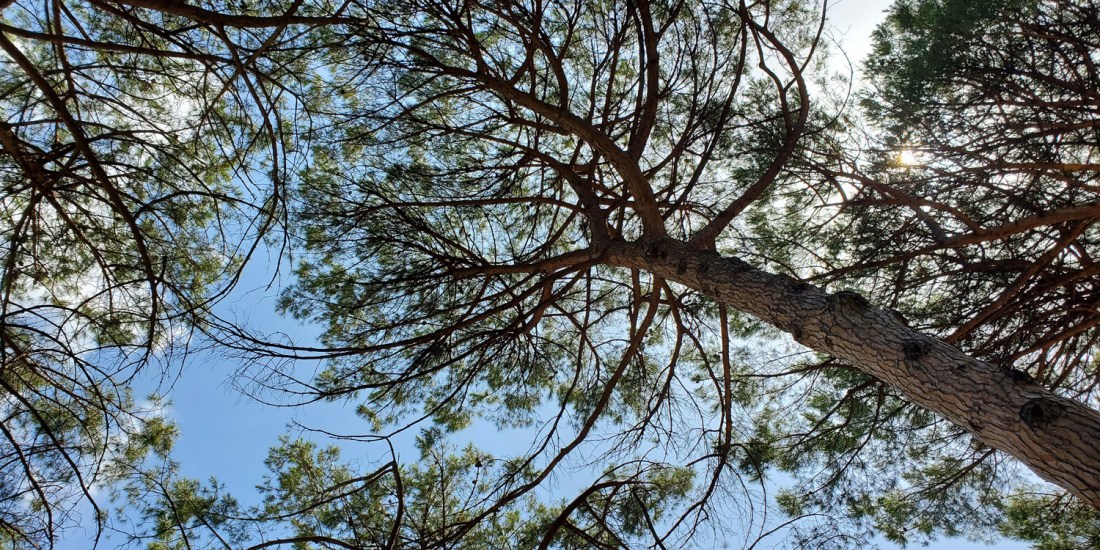
Our aim for the residency was to respond to environment and place by using only that which we found around us. Our residency base was Villa Santa Maria, a large house built in 1845. The house and garden was shaded by a number of very tall Stone Pine trees and we considered how to develop a performance working ‘with’ the trees.
The stone pine, (Pinus pinea) is a tree from the pine family (Pinaceae). The tree is native to the Mediterranean region but It is also planted in western Europe up to southern Scotland. It is a large tree that can exceed 25m (82 ft) in height. Cone scales are flat and bear two large seeds (1.5–2cm). Seeds are heavy and mostly dispersed by gravity or by small mammals.
Stone pines have been used and cultivated for their edible pine nuts since prehistoric times and been cultivated since the Roman period for timber (construction and ship-building).
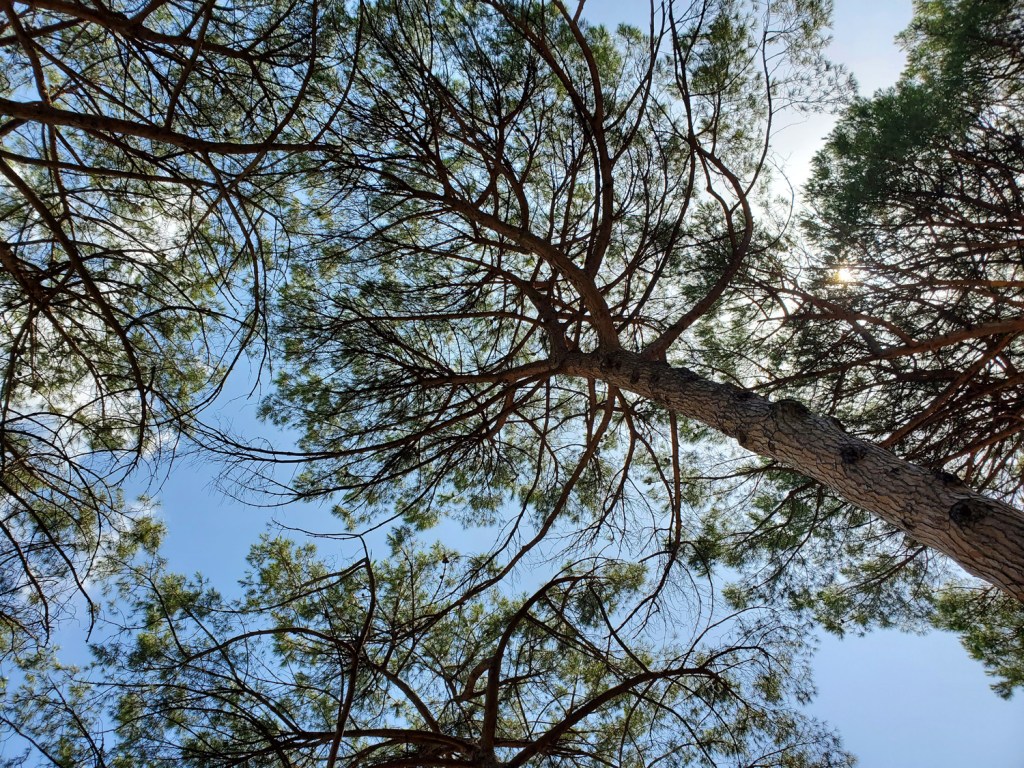

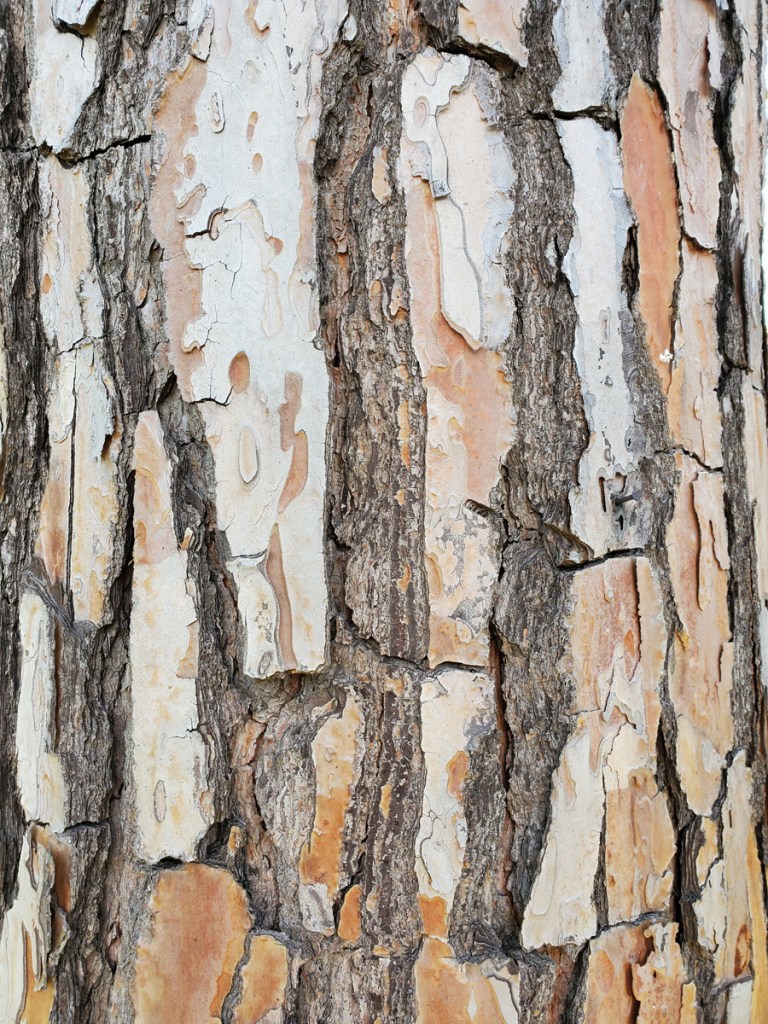

The Stone Pines, bark and cones in the garden of our residency base
Our research led to an experimental performance that we called ‘Dispersal: The Establishment of a Forest‘. Each performance was for one audience member.


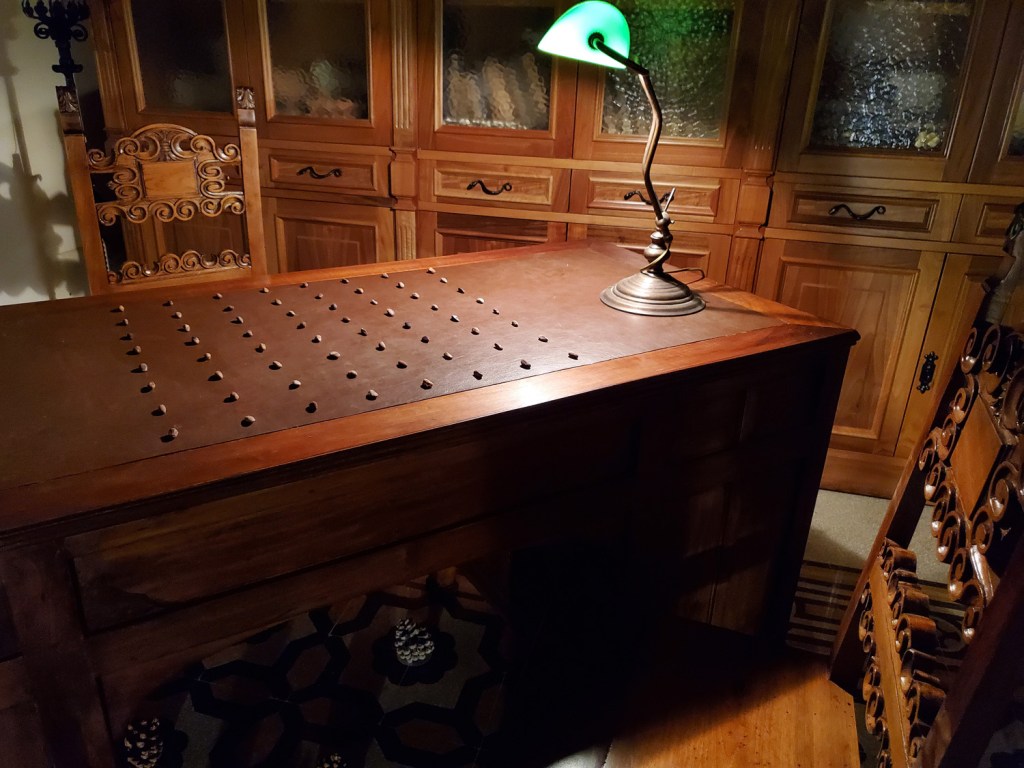
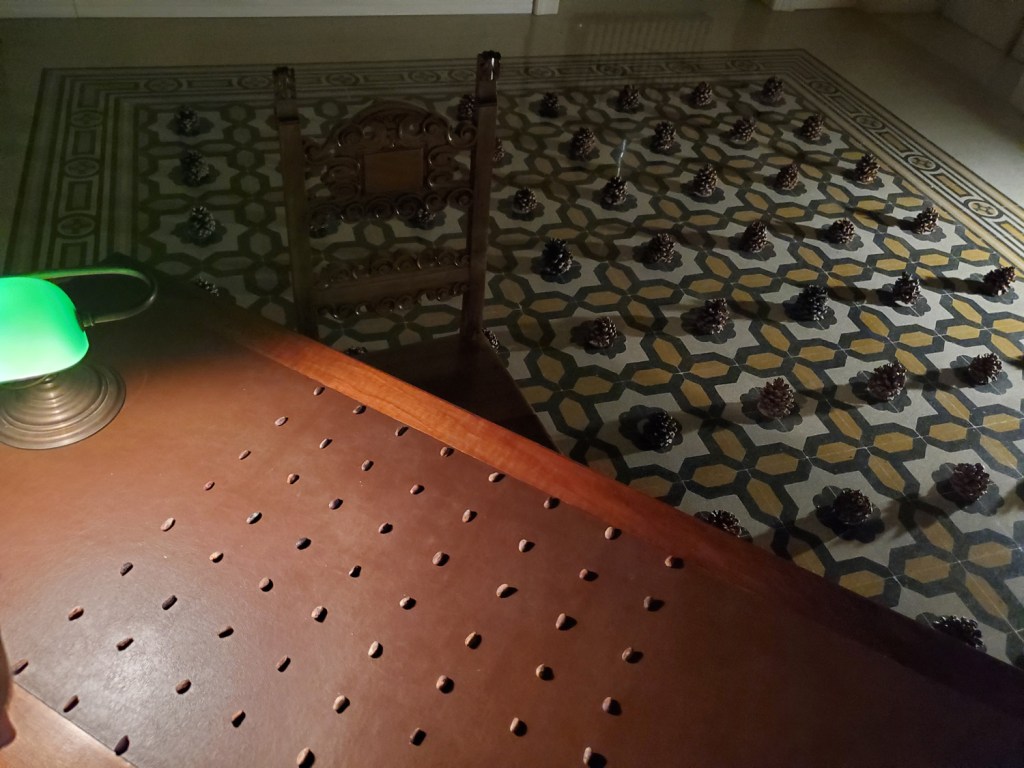
The performance setting
The Performance
The performance took place on the evening of 27th July. The audience had arrived at the house and were enjoying drinks and the sunset while waiting for a timed performance from other artists on the residency. People were chosen at random to take part in ‘Dispersal’. A participant (‘The Disperser’) was approached and handed an envelope. Inside was a card that read; “You are requested to take part in Dispersal: The Establishment of a Forest”.
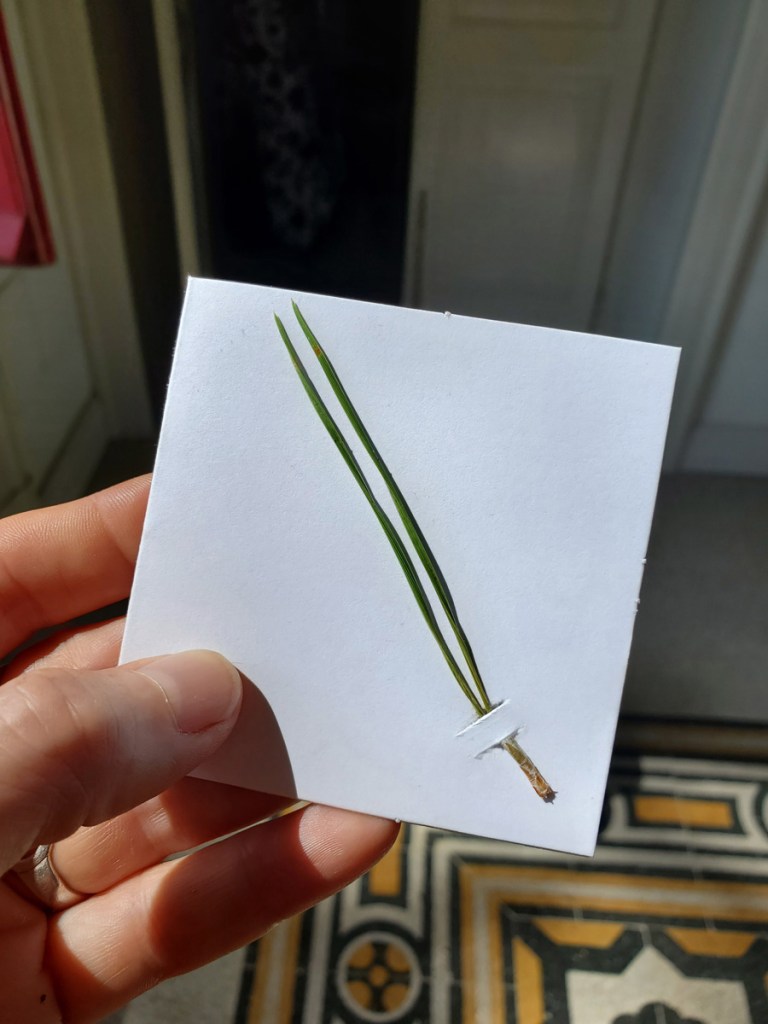
‘The Disperser’ was led through the house, up the marble staircase to a large wooden door. The door opened and ‘The Disperser’ was motioned inside.
The performance took place in silence.
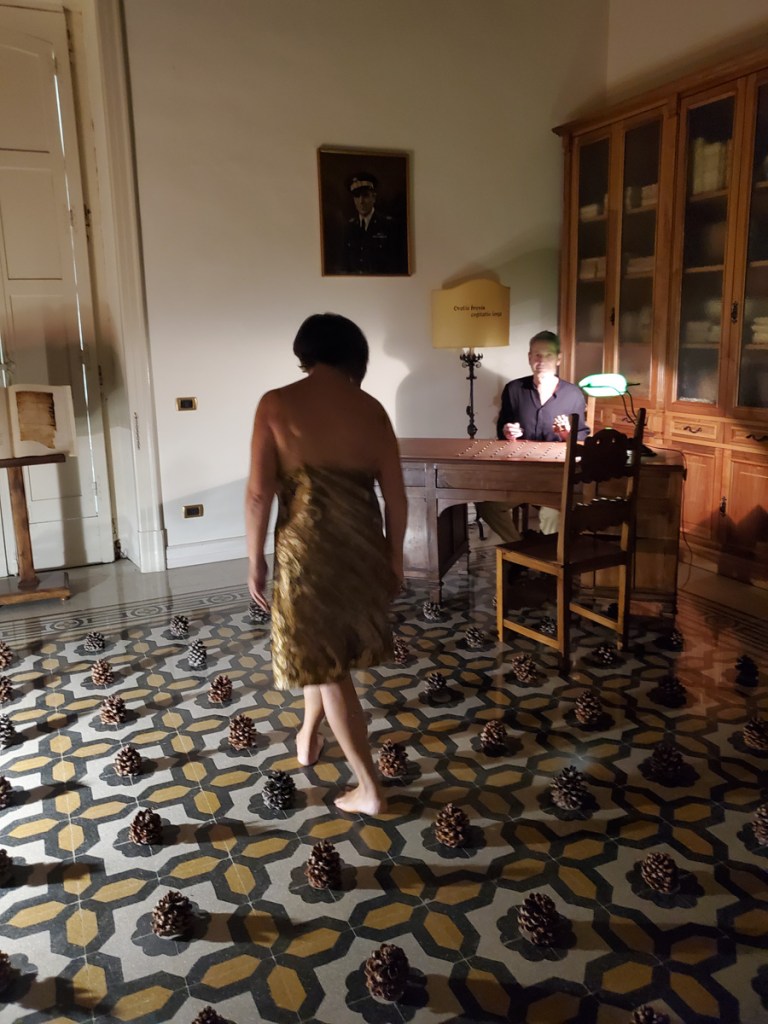
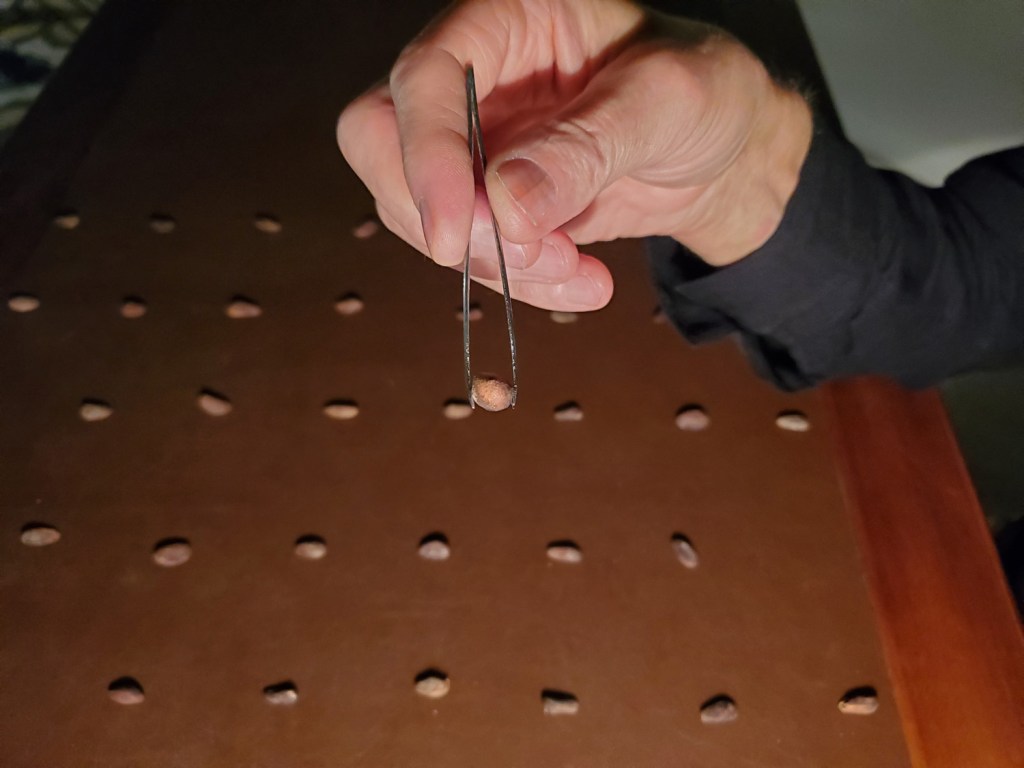
Arranged formally on the floor were 72 pine cones and mirroring this pattern on the table were 72 seeds, one seed from each cone. Seated at the table was ‘The Establishment’.

The scene on entering the room
The participant was motioned to make their way to the table through the pine cones, following any course that they pleased. Once at the table ‘The Establishment’ considered ‘The Disperser’, looked at the seeds and finally choose a seed which was handed to ‘The Disperser’. They were then motioned to leave the room with the seed.




The next ‘Disperser’ was then requested to attend.


Villa Santa Maria, the residency house and view of a stone pine from the window of performance room
Seed dispersal is a key process in the life cycle of plants as it is one of the ways by which genetic exchange occurs within and between populations and is universally considered important for biodiversity conservation.‘Dispersal’ juxtaposes the natural form of the tree with the formal nature of the house and its position in the civic hierarchy of the village. It invites people into an intimate performance that deepens awareness of the tree itself and draws attention to seed dispersal techniques as well as opening up a conversation on the human hand in tree planting and management.
‘Dispersal’ intends to explore our relationship with the more than human world and offers up possibilities for participants to act as an ‘allochory’ (seed dispersal method where a vector or secondary agent is used to disperse seeds) by participating in the.creation of a ‘dispersed forest’.
This is the first in a series of works that responds to environment and place by using only that which we find around us.
Images: Jo Hodges. A snapshot documentation of the work during the residency

Thanks to Alessia Siniscalchi and Kuturfactory for hosting and supporting the residency
Categories: 2023, Environmental, Interactive, Participatory, Performance, Research, Site Specific, Strategy

 Coleman & Hodges